Tuesday, November 10, 2015

It Could Have Been A Game

There's been a reoccurring series on the this blog called "It Should Have Been A Game."  Mostly, it's been about movies which would have been better served had they been presented in another medium, namely video games.  The "should" part of the title implies that the movies themselves were not very good.  However, this time I saw a movie that wasn't particularly bad as is, and as such I've changed the "should" to a "could" to reflect my opinion.  So, what is the movie?  Thor: The Dark World.

It might seem like an odd choice at first but, simply put, this is the best Final Fantasy film adaptation ever made.  Much better than Spirits Within, Asgard has all the science fantasy trappings of pretty much any of the settings found in Final Fantasy 6 onward.  What's more, the back story is all there in the now millennium old Norse texts, particularly "The Edda."  Along with all those ancient tomes, over a half century of Marvel comics have been published on the character.  In essence, The Thor films have their own extensive mythology, as well as recent history, making for fertile ground to tell an epic tale.  Final Fantasy settings, by contrast, tend to feel a bit shallow when it comes to in-fiction history because with each new iteration the world-building has to be done from scratch.

There's also no need for the overused amnesia trope.  Thor, instead relies on a stranger in a strange land (namely a visitor from Midgard) along with efficient narration and exposition on the part of the wise Allfather, Odin.  While only around half of the nine worlds have been explored in any detail in the films, it would be quite easy to spend more time visiting each in...say...a 40 hour RPG, rather than a two hour movie.  Thor's large cast of characters could also get more time to develop and interact, especially if they take the role of party members.  Off the top of my head playable characters could include Thor, Jane Foster, Loki, Sif (no, not Sid), Volstagg, Hogun, Fandral and (too-cool-for-the-group-to-stick-around-very-long) Heimdall.  Named supporting NPCs could include Odin, Frigga, Eir, Tyr, Erik Selvig and Darcy Lewis...plus her intern whose name escapes me at the moment.

When it comes to enemies, we've seen our share of Jotnar and Dark Elves in the film, but little in the way of Dwarfs, Light Elves or the Dead.  There are lots of potential foes that have yet to be debuted because of the limitations of the film medium.  Plus more time could be spent on fleshing out villains like Malekith.  According to actors and the director, a large portion of Thor: The Dark World was cut in post-production because of time constraints and a desire from the studio to change the pacing and tone of the the film.  Part of me wonders if the director's original vision was better suited to a video game.  

Perhaps best of all though is that fact that Thor doesn't feature any of the J-Pop garbage or Harajuku fashion trends that seem to have consumed the double digit sequels of Final Fantasy.  I'm not saying Thor doesn't have it's own brand of craziness, but at least the women of Asgard are wearing clothes that could be considered functional for leisure, battle or other day-to-day activities.  

Tuesday, November 3, 2015

31st Century Combat

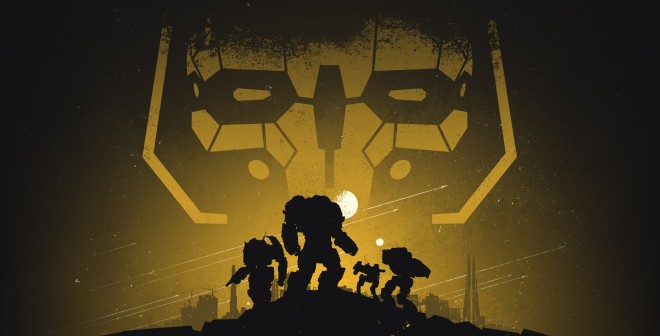
Let me guess...from left to right:
Griffon, Atlas, Locust and a Catapult?
The video game Kickstarter for Battletech has ended with the developers getting about eleven times their minimum funding goal.  It's not hard to see why considering the universe of Battletech is (in 2015 terms) an interactive version of "Game of Thrones" meets "Pacific Rim."  To boot the chosen in-game era, 3025, has a lot of "Mad Max" style post-apocalyptic trappings.  At first glance space feudalism might seem silly, but the concept isn't really all that far fetched.  In the context of a series of long and devastating interstellar wars, that have left pretty much all infrastructure (including production, transportation and even communication) in utter ruin, it stands to reason that individual planets would regress back to local rulers that control what vital resources remain.  As far as I'm concerned the original setting of Battletech is fine, it's the mechanics of the game it's attached to that have me worried.

If you're not familiar with the history of the Battletech franchise, it's basically a collection of board games and paperback novels, as well as video games running the gambit from RPG and RTS to more recently mech piloting sims.  At the core of all of it though is a three decade old hex grid war game designed for mech on mech combat.  The system is quite detailed and requires a lot of bookkeeping for each mech in addition to a hefty amount of dice rolling.  Just to give you an example, firing off a rack of missiles at a target necessitates a to-hit roll, and assuming that is successful, another roll to determine the number of missiles that actually do damage.  After that individual hit location rolls for each missile have to be calculated by comparing roll results to the proper table depending on the target's facing (front, back, left side, etc.).  In total you're looking at anywhere from one to twenty-four dice rolls (on top of multiple charts and stat sheets for consultation) just to determine the effect of one weapon system.  Keep in mind a large mech might have a half-dozen of these or more.  Obviously, all this gets increasingly unwieldy the more and bigger the mechs are up to the point that the entire thing collapses under it's own weight when the numbers of units reach into the double digits.  Of course a video could streamline all this, moving most of the number crunching under the hood, so to speak.  However, there are some fundamental issues with the Battletech ruleset that really need to be addressed in order to make the game enjoyable in the 21st century.

The Whiff Factor is bound 
to lead to a lot of player
 frustration
To illustrate what I mean, let's take a look at your average mechwarrior, who has a gunnery skill of 4.  He's not a wet-behind-the-ears rookie, but he isn't a war-hardened veteran either.  Assume he's in a mech and he's up against someone else who's also in one.  Now suppose he charges at this onrushing opponent on flat open terrain and opens fire at close range (90 meters) with some medium lasers (a common weapon for mechs).  Short range adds four to the gunnery skill making the target number 8.  He also has to apply another +2 for running and another +2 because his target moved between five and six hexes toward him.  So, the actual to-hit number is 12.  Since all roles are made using two six-sided dice, there's only one chance in thirty-six of hitting (less than 3 percent!).  This is worse than World War 1 naval gunnery.  I'm not engaging in hyperbole here; notoriously inaccurate dreadnought fire control scored hits roughly 5 percent of the time at distances a hundred times greater.  Even under more ideal circumstances the majority of a mech's attacks still miss.  The problem is aggravated by the fact that battlemechs don't have much in the way of ammo reserves.  A real life M1A2 abrams tank can keep its main gun in continuous action for 7 minutes.  Most battlemechs armed with a similar weapon are lucky if they have enough to last 2.  Logistical concerns aside, autocannons have always been too heavy (averaging twice the weight of their energy equivalents) and too dangerous (ammunition explosions will ruin your day) to be worthwhile.

For better or worse, Battletech has kept
backward compatibility with all
 earlier versions of the game despite
 its long history
The setting of Battletech has always been about using what you got rather than what you want.  Understandable, but this leads me to wonder how salvage will be implemented.  Will it be the some kind of generic point system or will there actually be long inventory lists of spare parts taken from fallen mechs?  I've always though of mechs as being fairly universal in terms of components.  Otherwise how would anyone keep them working after centuries of use (and abuse)?  What about aerospace fighters and dropships though?  Will infantry or vehicles play an important role?  There are so many things that need to be rewritten, overhauled or scraped altogether.  I think ditching the tech-bloat of other eras along with the Clans (seriously, the setting already had a huge variety of factions to begin with) is step in the right direction, but there's a lot more that needs work.  The development team has already gone on record saying that their crowdfunded turn-based video game will have a system true to the spirit of Battletech, but not necessarily the same in terms of mechanics.  That sound vaguely encouraging although I wonder how the old guard will react.  The devil is in the details, as they say.    Still, I wish the developers all the best, and should their game turn out great I'll definitely pick up a copy sooner rather than later.  If not then I guess it's just more mecha blues.

Wednesday, October 28, 2015

Saturday, October 24, 2015

To Be Announced...

...more commonly abbreviated as "TBA," is a rare thing when it comes to triple-AAA game development.  Generally, once a big budget game makes its debut a release date shows up at the end of the video (or bottom of the banner).  Sometimes it's an exact date, other times a vague window like "spring of 2016," "Q4," or at the very least "coming soon" (as is the case with Paradox's science fiction themed grand strategy game Stellaris.  However, when it comes to indie developers, these kinds of target dates sometimes don't apply.  Simply put, for some indie devs the game will come out when it's done.  So, what are a few noteworthy examples?  Well...I'm glad you (I...?) asked because there are five titles in particular that have been percolating at the back of my mind, even though I have no idea when I'll actually (if ever) get to play them.

I mentioned this one about a year ago on this very blog.  Quick recap; it's a retro-future sci-fi horror game set on the moon.  Gameplay features a lot of rogue-like elements including procedural generated zones and perma-death.  For a while it seemed like the game had become vaporware, but an interview with the head of the studio last summer revealed that the game was still under active development.  One wonders if the team played Alien: Isolation or, more recently Soma, and decided to rework some of their ideas in order to avoid making something that would feel like nothing more than a cheap knock-off.  Whatever the reason, I hope I can try this game out sooner rather than later.

Aside from having some really cool promo artwork for sale, this space combat flight-sim has been quietly in the works for quite long time.  Supposedly, it will support virtual reality headsets with an in-cockpit view.  In addition to dogfights, players will be able to take command of fleets by going to a slow-mo tactical view and issuing order to supporting strike craft and even capital ships.  The sound effects are really good, and the graphics have been steadily improving with each new set of screen shots released.  I really want to purchase a copy of this game and take it for a spin, but I'm not sure I'll buy a flight stick or one of those 3-D helmets though...

Similar to the previously mentioned title, this is also a space combat flight-sim.  What makes it unique though is the graphics style.  It borrows the old rotating bitmapped sprites used in games like Wing Commander I and II, as well as Privateer.  On the other hand capital ships are fully rendered using more modern polygonal models and textures, which is probably a good thing since that was one of the weak points of those classics.  Also, unlike any of the other titles mentioned here, Wings of Saint Nazaire has an alpha build that anyone can download from the official website for free.  Like a lot of unfinished games (such as Besieged and Kerbal Space Program) development has become somewhat bogged down in the conversion to Unity 5.0, but once that hurtle is cleared development should continue.

Originally I was going to talk about a title called Slain, but it seems that game has gotten a release date (according to the Steam page, "Prepare to be slain December 9th").  So, I'm going to talk about Death's Gambit instead.  The development team is basically pitching it as a side scrolling Dark Souls.  It's not the first game to try this.  The upcoming PSN exclusive Salt and Sanctuary is pretty much being billed as the same thing.  That said, watching gameplay footage of Death's Gambit (or Slain for that matter...) remands me more of Ghosts and Goblins, Ghouls and Ghosts and even old 16-bit and PSX era Castlevania titles.  Regardless, this game is (according to the official website) coming first and foremost to the PC.

I've thrown up some gifs for this little pixle-art gem on my reoccurring end-of-the-month video game gallery posts already, but since that particular blog entry lacked any kind of explanation, I though it would be wise to elaborate on it here.  Once again, this could be thought of as an isometric Dark Souls, but to call it such might be a great disservice.  Eitr (as the old Norse word implies) is dominated by a strong Scandinavian-themed setting, but don't expect to play as a horned helmet wearing viking.  Instead players are in control of a rather capable looking shield-maiden.  That, plus the perspective makes it feel a bit like the original Diablo or the backer alpha build of Hyper Light Drifter.  There's also another game much like this called Perish, but since not much information is available for that game yet I've decided not to give it a separate spot here.

There was one more high profile game that I was going to mention on this list, but I can't quite seem to recall what it was exactly.  Something about skies...Oh well...it couldn't have been all that important or highly anticipated...


Thursday, October 15, 2015

Axios!

Back when 343 Industries was finishing up work on Halo 4 I got a chance to sit down and watch their live-action web mini-series, "Forward unto Dawn".  At the time I was mildly entertained, but put little thought into it beyond that.  However, I recently got around to watching the entire thing as a single hour-and-a-half film and found it still holds up surprisingly well.  I should stress this is coming from someone who has read their fair share of military sci-fi.  Names like Heinlein, Card, Weber, Scalzi, Haldeman and Forstchen are familiar to me and (while I've only played the first two Halo games) I've read the first four Halo novels from cover to cover.  So, what makes Forward unto Dawn special?  Well...it's difficult to point to anything in particular, rather, what makes it great is a culmination of spot-on casting, deftly applied cinematography, and a unconventional script.

Starting with the last one first, the normal way to approach a movie adaptation of Halo would be to cast Master Chief in the lead role with a Covenant Elite or Brute as the primary antagonist.  Some Precursor artifact would be the token McGuffin and the context of the war would be established via an opening montage.  Instead, we see events as a flashback through the eyes of military cadets being trained to fight a nebulous group of insurrectionists.  For the sake of brevity some of the cast fall into stereotypical roles such as the book-smart Asian, aggressive red-head, and stuck-up blonde.  On the other hand the characters with more screen time, such as Lasky and Silva, are much more three dimensional.  There's also a lot of buildup before the action really starts, and Master Chief himself doesn't show up until well past the halfway mark which (all things considered) is kind of a bold move.

The visuals are also surprisingly good.  Because of budget constraints the director couldn't rely on CGI special effects all that much.  Props are also authentic looking thanks to work done be WETA back when this was going to be a Peter Jackson production.  The Covenant are kept mostly hidden or shown only briefly which makes them far more threatening than their cartoony presentation in the games.  That said, there's still a lot interesting use of color pallets.  I especially liked the juxtaposition of the muted academic environments with vibrant battle scenes.  The image of a shimmering warthog racing down a densely forested road in the pitch-black night speaks to the quality of the lighting as well.

In order to emphasize the size difference between SPARTAN-IIs and ordinary people, actors of small and slender build were deliberately selected for Hastati squad to contrast with the actor portraying Master Chief - who stands over six feet eight inches tall (203cm).  Age, also a key theme, is well represented in the casting.  The cadets all look appropriately young which help setup the ending surprise that their rescuers aren't any older than them.  Performances are generally good, with the one noteworthy standout being Cadmon (Lasky's older brother).  Of course April Orenski's look of utter and complete mental exhaustion shortly before the credits role is priceless too.

When you consider all the different movie adaptations of video games that have been made over years (and how poorly most of them have been) Forward unto Dawn is refreshingly well done.  I would by no means call it a modern cinema classic, but when you consider the budget, original source material and the simple fact that it was released for free then this film is definitely worthy.